Pick a Lane: The Death of the Generalist and the Rise of the Obsessive
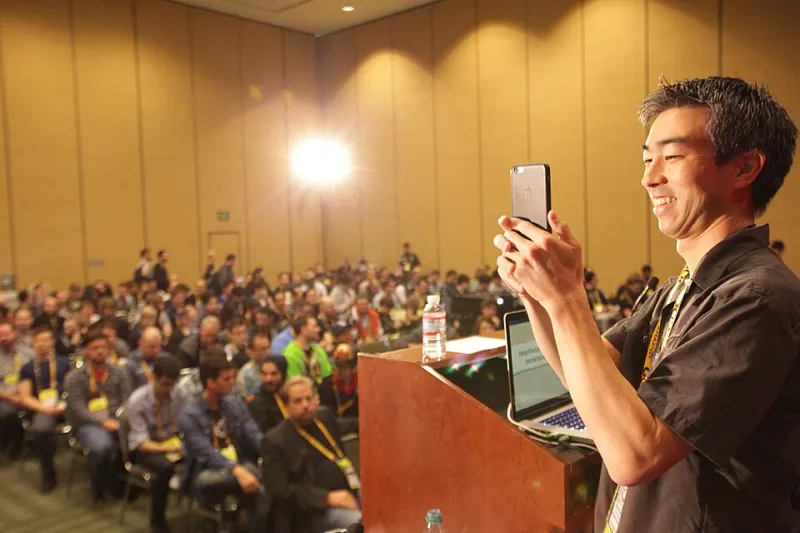
Photo: Official GDC, CC BY 2.0, via Wikimedia Commons
There was a time — not even that long ago — when being versatile was the whole point. You wanted the guy who could do a little of everything. The Swiss Army knife employee. The creator who covered music and food and travel and whatever else was trending that week. Broad appeal was the goal, and the logic was simple: more topics, more people, more growth.
That logic is dead. And the internet killed it.
Somewhere between the algorithm's evolution and the audience's growing impatience, generalism became a kind of creative sin. Now, if you're not hyper-specific — if you don't have a defined lane, a niche within a niche, a subculture within a subculture — you're basically invisible. And the people who figured that out first are cleaning up.
The Algorithm Doesn't Do 'Miscellaneous'
Here's the thing nobody tells you when you start creating content: platforms aren't built for range. TikTok's For You Page is a classification machine. It's constantly trying to figure out what box you belong in so it can find the other people who live in that box. If you make a video about vintage fountain pens one week and sourdough bread the next, the algorithm genuinely doesn't know what to do with you. It hedges its bets and you get mediocre reach on everything.
But if you are the fountain pen person — if every single video is about nibs and ink and the quiet joy of a perfectly weighted barrel — suddenly the algorithm has a job it can actually do. It finds your people. And your people, it turns out, are intensely loyal in a way that casual followers never are.
This isn't just a TikTok phenomenon. Podcast ecosystems have been running this playbook for years. The shows with the most dedicated fanbases aren't the ones trying to appeal to everyone. They're the ones going absurdly deep on something specific. There are successful podcasts built entirely around the business history of fast food chains. Around competitive puzzle solving. Around a single decade of a single city's music scene. These shows don't have massive audiences by traditional standards, but their listeners are obsessed in a way that mainstream radio could never manufacture.
Gatekeeping as a Feature, Not a Bug
Here's where it gets interesting — and a little uncomfortable. Hyper-niche communities don't just welcome obsessives. They actively filter out casuals. The inside jokes, the specific vocabulary, the unspoken rules about what counts as legitimate interest — all of that functions as a kind of velvet rope. You either get it or you don't, and if you don't, that's kind of the point.
In old-media logic, gatekeeping was a problem to be solved. You wanted to lower the barrier to entry, make things accessible, grow the tent. But in a fractured attention economy, a little gatekeeping is actually a community-building tool. It creates a sense of belonging for the people inside the rope. It makes membership feel earned.
You see this in every corner of the internet. Sneakerheads who can clock a fake from a single photo. Bookstagram accounts where recommending a bestseller that everyone has already read is almost embarrassing. Dark academia circles where your aesthetic credibility lives and dies by whether your coffee cup is visible in the shot. These aren't just hobbies — they're identity ecosystems with their own internal hierarchies.
The Career Math Has Changed
For creators trying to build something sustainable, the shift toward niche is no longer optional. The math just works differently now. A YouTube channel with 50,000 deeply engaged subscribers in a specific space — say, miniature historical diorama building, or competitive axe throwing, or the overlapping worlds of true crime and genealogy — can generate more income and more stability than a channel with 500,000 lukewarm followers who showed up for one viral video and never really connected with anything else.
Brands figured this out too. The sponsorship money has migrated toward micro-influencers with specific audiences because the conversion rates are genuinely better. Someone following a channel dedicated to home espresso equipment is already pre-qualified as a person who will spend money on home espresso equipment. That's not rocket science, but it took the industry a while to catch up.
What this means practically is that pitching yourself as a generalist — in freelance work, in content creation, in almost any attention-economy adjacent career — is increasingly a red flag. It reads as unfocused. Clients and audiences alike want to know exactly what you are and exactly who you're for.
What Mainstream Culture Does With All This
So where does this leave the big players? The legacy media outlets, the broadcast networks, the brands trying to speak to America in a single voice?
Honestly, in a weird spot. The instinct is still to chase broad appeal — to make the thing that nobody hates rather than the thing that somebody loves. But that strategy produces content that lands with a kind of soft, forgettable thud. It exists. People encounter it. Nobody talks about it.
The smarter move, increasingly, is to pick a lane even at scale. To deliberately serve a specific sensibility rather than trying to be everything to everyone. Some media companies have started doing this — building distinct brands within their portfolio that speak to specific audiences rather than trying to stretch a single brand to cover everyone. It's fragmentation by design.
The chaos of niche culture isn't going away. If anything, the fractures are getting finer. The communities are getting more specific. The inside jokes are getting more inside. And somewhere in the middle of all that beautiful, chaotic specificity, the generalists are quietly updating their LinkedIn bios, trying to figure out which lane they actually belong in.
Pick one. Go deep. That's the whole game now.