The Basement Is the New Town Square: How DIY Venues Are Stitching America Back Together
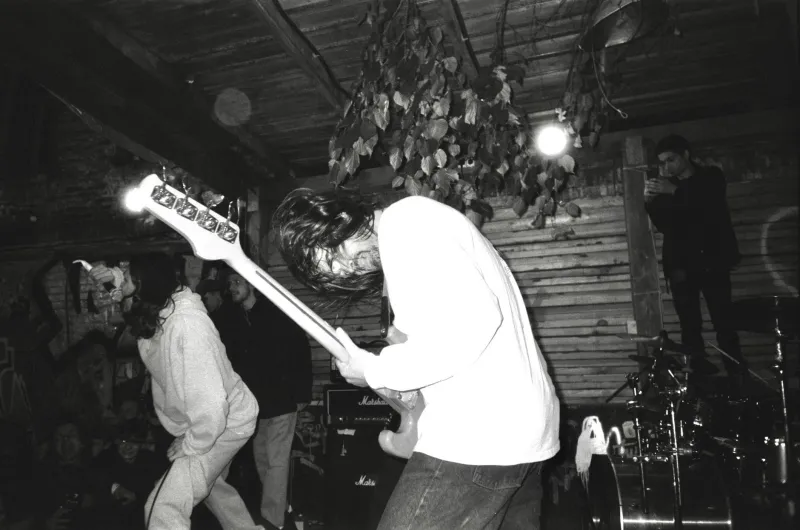
Walk into the right basement on a Friday night in any mid-sized American city and you'll find something that feels almost radical by today's standards: people, in a room, actually talking to each other. No velvet rope. No $18 cocktail minimum. Just a PA system held together with gaffer tape, a band that drove six hours to play for forty people, and a crowd that somehow already knows every word.
This is the underground music scene, and it's quietly doing some of the most important community-building work in the country right now.
More Than Just a Show
DIY venues — the house shows, converted garages, rented union halls, and repurposed storefronts that operate outside the mainstream concert industry — have always existed on the margins. But in the last several years, as corporate consolidation has swallowed up mid-size venues and rising rents have pushed artists and audiences alike out of cultural centers, these grassroots spaces have taken on a new weight. They're not just places to see music anymore. They're functioning community hubs.
Take Lot 11 in Louisville, Kentucky. What started as a DIY outdoor stage in a vacant lot behind a record shop has, over the past four years, evolved into something far more layered. During the summer of 2021, when the neighborhood was reeling from a combination of pandemic fallout and a devastating local flooding event, Lot 11 became a de facto distribution center — bands helped haul in donated supplies, local promoters organized benefit shows that raised thousands of dollars within days, and the regulars who'd been coming to shows for years showed up to volunteer without being asked. "We didn't plan to be a disaster relief center," says Marcus Teel, one of the founding organizers. "But the infrastructure was already there. The trust was already there. That's what years of showing up for each other builds."
That trust isn't accidental. It's the byproduct of a culture that DIY spaces cultivate intentionally — through all-ages shows, sliding-scale admission, and an unwritten code that everyone is welcome as long as they act right.
The Economics of Staying Alive
Of course, idealism only goes so far when the landlord wants their rent. The economics of running an underground venue in 2024 are genuinely brutal, and the people doing it are almost universally operating at a loss or breaking even at best.
In Chicago's Pilsen neighborhood, Rosa Delgado has been running a 75-capacity art space called La Grieta out of a former printing shop for three years. She funds it through a patchwork of strategies: a Patreon with about 200 supporters, a monthly vinyl swap meet that draws the neighborhood in, occasional grant money from local arts foundations, and the kind of creative financial improvisation that would impress any startup founder. "Corporate venues have booking agents and marketing teams and ticketing contracts," she says. "We have group chats and people who believe in what we're doing."
What La Grieta — and dozens of spaces like it — have figured out is that community investment is a genuine economic model, even if it doesn't look like one on paper. When your audience feels ownership over a space, they show up. They bring friends. They buy the merch. They Venmo you twenty bucks when the boiler breaks because they don't want to lose the thing that matters to them.
The threat from corporate consolidation is real, though. Live Nation and its subsidiaries now control a staggering portion of the live music ecosystem — from stadium tours down to mid-size clubs in many markets. As those mid-tier venues get absorbed or priced out, the ladder that once allowed artists to grow from DIY shows to 300-cap rooms to theaters has started to collapse in the middle. DIY venues are being asked to do more with less, bridging a gap that the industry created.
Case Study: What Phoenix Taught Us
Phoenix, Arizona doesn't have the coastal music mythology of New York or LA, but it has one of the most quietly resilient DIY networks in the country. A loose collective of promoters known locally as the Desert Grid has been routing touring bands through house shows, VFW halls, and art galleries for nearly a decade, deliberately avoiding the city's corporate club circuit.
When one of their core venues — a converted auto body shop in the Garfield neighborhood — faced eviction in 2022, the response was immediate and communal. Artists from across the country donated auction items. Local businesses sponsored a fundraiser show. Within three weeks, the community had raised enough to cover six months of back rent and negotiate a longer lease. "People kept saying 'we can't lose this place,'" recalls promoter Javi Cortez. "And I kept thinking — yeah, but why? It's not because of the acoustics. It's because of what happened to them inside those walls."
That emotional architecture — the memories, the relationships, the formative experiences — is what DIY venues are actually selling. And it's the one thing a corporate booking algorithm can't replicate.
The Culture That Lives Downstairs
There's something worth sitting with here, beyond the economics and the logistics. The underground music scene represents a fundamentally different relationship between art and audience than what the mainstream entertainment industry offers. At a DIY show, the artist and the crowd occupy the same social space. You share a bathroom. You help load equipment. You find out the drummer works at the same coffee shop as your roommate.
This is not a nostalgic fantasy — it's a living reality in cities from Boise to Baltimore, from Tucson to Tallahassee. And the communities that form around these spaces tend to be unusually durable. They survive lineup changes, venue closures, and the general entropy of adult life because they were built on something more than shared taste in music. They were built on showing up.
For anyone paying attention to how American communities are fracturing along lines of loneliness, distrust, and disconnection, the DIY venue looks less like a quirky subculture and more like a working prototype for something we desperately need more of.
The basement, it turns out, might be the most important room in the building.