Small on Purpose: Why Gen Z Artists Are Ditching Virality and Building Something Real
Here's a sentence you probably didn't expect to read in 2024: some of the most interesting young artists in America are actively trying not to go viral.
Not because they've failed at it. Not because they don't know how the algorithm works — trust me, they know better than most of us. But because a growing number of Gen Z creators have looked at what viral success actually delivers and decided, pretty clearly, that it's not what they're after.
This is an opinion piece, so let me just say it plainly: I think they're onto something.
The Clout Economy and Its Discontents
Let's be honest about what the attention economy asks of artists. It asks them to be consistent, optimized, and legible to an algorithm that rewards novelty in very specific, narrow ways. It asks them to produce content on a schedule that has nothing to do with creative rhythm and everything to do with platform engagement metrics. It flattens the weird, the slow, and the genuinely experimental into something more palatable — and then rewards the palatable version with reach while burying everything else.
For a generation that grew up watching creators burn out in real time, watching artists pivot from genuine weirdness to brand-safe content the moment they hit a certain follower threshold, the appeal of opting out makes a lot of sense.
"I watched so many people I admired completely change what they were making once they got big," says Dani Reyes, a 22-year-old painter and zine maker based in Portland, Oregon. "Not because they wanted to. But because the audience they'd built expected something specific, and they felt trapped by it. I don't want that. I'd rather have 300 people who actually care about what I'm making than 300,000 who followed me because of one video."
Dani's not alone in that calculation.
Discord, Zine Fests, and the Joy of Niche
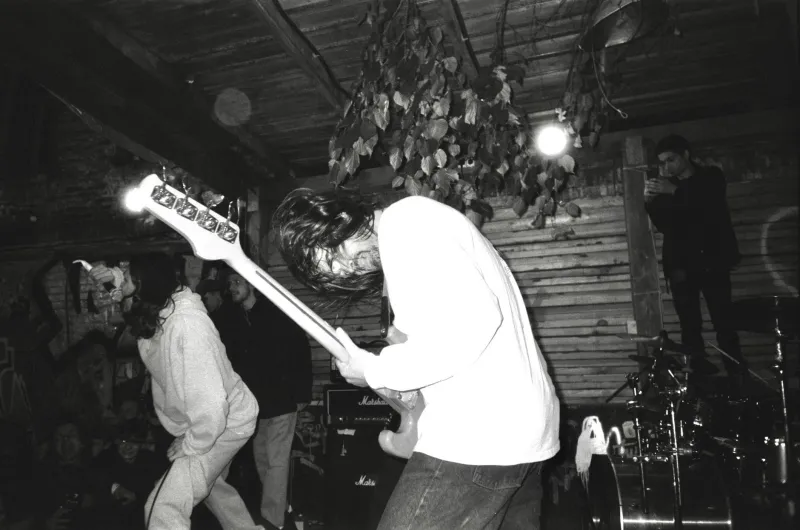
The spaces where this shift is most visible aren't the ones getting the most coverage. They're Discord servers with a few hundred members where musicians share unreleased demos and get genuinely thoughtful feedback. They're zine fests in church basements in mid-sized cities that sell out every table in advance. They're Bandcamp pages with no social links attached, just music and a mailing list.
These aren't failure states. They're intentional architectures for a different kind of creative life.
Take the music producer Kwame Ellis, 24, who makes beat-driven instrumental music somewhere in the territory between ambient and hip-hop. He has a modest TikTok presence but has deliberately kept his primary community on a private Discord server he calls The Frequency. About 400 people are in there. He drops new music to them first, runs listening sessions, and occasionally takes on collaborative projects with members. "The people in that server have genuinely changed how I make music," he says. "They're not passive consumers. They're in conversation with me. That's irreplaceable."
Kwame could probably grow his TikTok significantly if he committed to it. He's chosen not to, at least not yet, and not in the way the platform incentivizes. "I've seen what happens when you optimize for TikTok," he says. "You start making music for the first seven seconds. I'm not interested in that."
The Authenticity Problem
Now, I want to be careful here, because "authenticity" is a word that gets weaponized a lot in conversations about art and culture, and it can curdle into its own kind of performance pretty quickly. There's nothing inherently more authentic about having a small audience. Plenty of artists with tiny followings are just as calculated and self-conscious as anyone chasing virality.
What's genuinely interesting about this particular shift isn't the size of the audience — it's the relationship to the audience. The artists who seem most energized by this approach aren't just rejecting scale for scale's sake. They're actively building structures for reciprocal engagement: the Discord where feedback is real, the newsletter where they share process and doubt alongside finished work, the show where they stick around after to actually talk.
Maya Thorn, a 21-year-old performance artist and poet in Atlanta, describes it this way: "I want the people who experience my work to feel like they know me a little bit. Not my brand. Me. That requires keeping things small enough that I can actually show up as a person."
That's a fundamentally different aspiration than what most of the content economy is built around.
What This Means for the Culture
If you zoom out a little, what's happening here looks like a meaningful counter-movement to the flattening effect of algorithmic culture. When everything is optimized for maximum reach, the things that don't optimize well — the slow, the strange, the deeply specific — tend to disappear from view. A culture that routes all its creative energy through a handful of platforms and their engagement metrics is a culture that gradually loses its capacity for genuine surprise.
The Gen Z artists choosing smallness aren't just making a lifestyle choice. They're, maybe without fully knowing it, doing preservation work. They're keeping alive a mode of art-making that prioritizes depth over breadth, resonance over reach.
And here's the thing — it's working. The communities forming around these artists are unusually loyal, unusually engaged, and unusually willing to put actual money into supporting the work. Bandcamp sales, Patreon subscriptions, show tickets, merch bought because someone genuinely wants to support the artist rather than because an ad targeted them: these are the economic signals of a different kind of creative ecosystem taking shape.
The Real Flex
Maybe the most interesting thing about this moment is what it says about where value is being located. For a while, the number — followers, streams, views — was the thing. It was legible, shareable, and it flattened everything else into noise.
But more and more, the young creators doing the most interesting work seem to be measuring something else: the quality of the conversation, the depth of the connection, the sense that their art is landing somewhere that matters.
That's a harder thing to quantify. It doesn't fit neatly into a media kit or an analytics dashboard. But spend five minutes in Kwame's Discord or at one of Maya's shows, and you'll feel it immediately.
Some things are still best experienced in a room — or a server — with people who actually showed up because they wanted to be there.