From First Song to Last Call: Why the Setlist Is the Most Underrated Artform in Your City
There's a moment at a great show — you probably know it — where a song drops and you think, of course that's next. It feels inevitable. Like the artist read your mind, or maybe just understood the room better than you understood yourself. That feeling doesn't happen by accident.
For a growing number of independent musicians and DJs, the setlist isn't a checklist. It's a script. A carefully built emotional journey with a beginning, a middle, and an ending that's designed to do something to you by the time you walk back out into the night air.
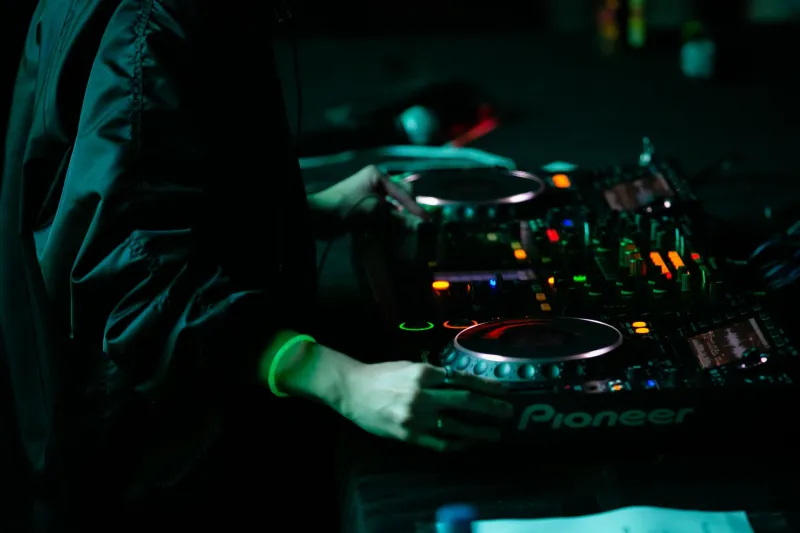
"People think I'm just pressing play," says Marcus Webb, a Chicago-based DJ who runs a monthly residency at a Logan Square bar. "But I'm writing something. Every set is a short story. The first track is an opening line. The last one is where I decide how I want you to feel when you leave."
The Architecture of a Set
Ask any serious local artist about their curation process and you'll quickly realize how much thought goes into something most audiences take for granted. The setlist — whether it's a DJ's two-hour block or a band's twelve-song run — functions like a piece of architecture. Every element has to hold weight and connect to what's around it.
Sara Delgado, who fronts a four-piece indie-soul band out of Austin, describes her approach as cinematic. "We think about it like scenes in a film," she says. "You can't open with the emotional climax. You have to earn it. We spend as much time arranging the order of songs as we do rehearsing them."
That kind of intentionality is showing up more and more in local scenes across the country — from the jazz bars of New Orleans to the DIY loft shows of Brooklyn, from the listening rooms of Nashville to the underground dance nights in Detroit. Artists are taking the architecture of performance seriously, treating the flow of songs as its own form of expression.
Reading the Room (Without Losing the Thread)
Of course, the trickiest part of setlist craft isn't the planning — it's the pivoting. A live audience is a living thing, and the best performers know how to respond without completely abandoning the story they set out to tell.
"You walk in with a plan and then you read the energy," says DJ Tomás Reyes, who plays everything from cumbia to electronic soul at venues in Los Angeles's Boyle Heights neighborhood. "Sometimes I have to skip three songs and jump somewhere else entirely because the crowd is going a different direction. But I always know where I'm trying to end up. That anchor keeps everything from falling apart."
This skill — balancing preparation with improvisation — is something that separates artists who merely perform from those who create experiences. It's also, Reyes points out, deeply tied to community knowledge. The more familiar you are with your audience, the better you can anticipate them.
"I know the regulars. I know what they need at 11pm on a Friday versus midnight on a Saturday. That's not something an algorithm can replicate. That's a relationship."
Themes, Moods, and the Stories Songs Tell Together
Beyond the mechanics of energy management, some artists are building sets around explicit themes — almost like curated exhibitions. Webb describes a recent set he structured around the idea of "leaving something behind" — songs about departure, closure, and moving forward, drawn from soul, house, and Afrobeats.
"Nobody knew that was the concept," he admits, "but I think they felt it. By the end of the night, people were hugging each other. That's not an accident."
Delgado's band takes a similar approach when they're on tour, often reshaping the setlist to reflect something specific about the city they're playing in. In Memphis, they leaned into gospel-influenced arrangements and placed their most call-and-response-heavy song near the top. In Seattle, they opened with something quieter and built slowly, reading the more reserved room with patience.
"It's a form of respect," she says. "You're saying: I see where you are. I'm going to meet you here and take you somewhere together."
Why This Matters Beyond the Stage
The deeper you get into conversations with local artists about this stuff, the more you realize setlist curation is actually about something bigger than music. It's about the belief that shared experience can be intentionally shaped — that a community of strangers in a room can be guided through something meaningful if the person behind the music is paying close enough attention.
In an era where streaming services flatten everything into an endless horizontal scroll, where algorithmic playlists optimize for retention without any regard for emotional arc, there's something quietly radical about an artist who insists on telling a story from start to finish.
"Spotify doesn't care how you feel at the end," Webb says. "I do. That's the whole point."
Reyes echoes that sentiment with a shrug and a laugh. "I want people to walk out feeling like something happened to them. Even if they can't explain what. Especially if they can't explain what."
The Craft You Never See
For most audiences, the setlist is invisible. You experience the result — the highs and lows, the surprise track that hit different, the closer that sent you home buzzing — without ever seeing the hours of thought that shaped it. That invisibility is, in a way, the highest compliment. When it works perfectly, you don't notice the craft. You just feel the feeling.
But that doesn't mean the work isn't there. Marcus Webb keeps a running notes document on his phone with observations from every set — what worked, what landed flat, what the room did when a particular transition hit. Sara Delgado's band holds post-show debriefs about pacing and flow like a film crew reviewing dailies.
These artists are doing something that doesn't get nearly enough credit: they're treating your night out as a narrative experience worth crafting. They're saying that the two hours you spend in a sweaty room with a hundred other people deserves the same care and intention as anything you'd find on a stage with a spotlight and a program.
And honestly? The next time a set hits you just right — when the music seems to know exactly where you are and where you need to go — maybe take a second to appreciate the person who wrote that particular story just for the room you were standing in.
That's the art of the setlist. And it's been hiding in plain earshot this whole time.