Nothing Playing: Why the Most Powerful Moment in Music Is When It Stops
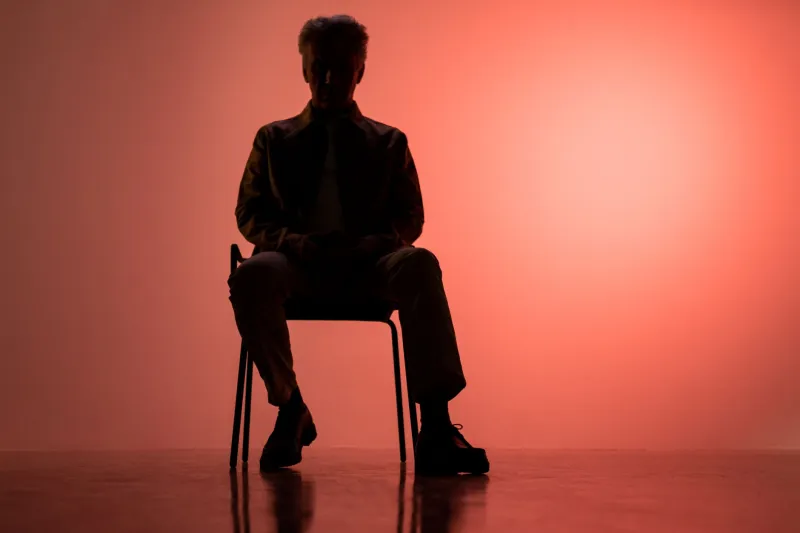
There's a moment in a recording by Philadelphia-based ambient artist Dara Osei where everything just stops. Not fades — stops. For almost four full seconds, there's nothing. No hum, no reverb tail bleeding into the next phrase, no ambient room noise. Just a clean, hard wall of quiet. And then, when the melody returns, it hits differently. Like a deep breath you didn't know you were holding.
That four seconds has been the single most commented-on moment in any of Osei's releases. Fans describe it as "unsettling," "cathartic," "the first time a song made me cry for no reason." Osei says the silence was intentional — but not in the way you might expect.
"I didn't put it there for dramatic effect," she said in a recent community Q&A posted to her Bandcamp page. "I put it there because I was exhausted. I wanted to know what it felt like to just stop. And I figured if I felt that way, someone listening probably did too."
She's not alone in that instinct.
The Sound of Not Saying Anything
Across genres — indie folk, experimental electronic, lo-fi R&B, even certain corners of hip-hop — a quiet movement is building around restraint. Artists are making deliberate choices to strip back, hold back, and in some cases leave entire sections of a song structurally empty. It's not minimalism as aesthetic. It's minimalism as communication.
For singer-songwriter Marcus Teal out of Nashville, the shift came after spending two years trying to compete sonically with the loudness of streaming. "Everything was getting bigger," he said. "More layers, more drops, more everything. And I kept feeling like the songs were disappearing inside all that production." His latest EP features several tracks built almost entirely around negative space — single guitar notes with room to breathe, vocals that trail off instead of resolving, long instrumental stretches with nothing but a room tone underneath.
Listeners have called it sparse. He calls it honest.
Overstimulation as the Enemy of Feeling
There's a cultural argument underneath all of this that goes beyond music theory. We are, by most measures, a population running on sensory overdrive. Notifications, autoplay, content queues that never end — the baseline volume of daily life has been steadily creeping up for years. For a lot of people, the idea of a song that gives you room to actually feel something has become almost radical.
Chicago-based producer and multi-instrumentalist Yemi Adaora talks about this explicitly in her creative process. "When you give someone silence, you're giving them space to bring themselves into the music," she said. "A full, dense track tells you how to feel. A quiet one asks you what you feel. That's a completely different relationship."
Adaora's recent project — a 22-minute piece released exclusively through her Patreon — has almost no melodic content for the first seven minutes. It opens with the sound of a window being opened, street noise, then a slow fade into near-total quiet before the first note appears. She describes it as "an invitation rather than a performance."
The Live Silence Problem
Bringing this philosophy to a live setting is a different challenge entirely. Audiences are trained to interpret silence as a mistake. Dead air at a show makes people nervous, and nervous people look at their phones. Several artists working in this space have had to actively train their audiences to sit with quiet — sometimes with mixed results.
Osei recalls an early show in Brooklyn where she held a silence in the middle of a song for about six seconds. "Someone literally yelled 'is the PA down?'" she laughed. "And half the room checked their phones. But the other half — you could see it on their faces. They got it. And those were the people who came back."
Teal has started including a brief note in his show programs explaining that silence is part of the performance. "It sounds pretentious when I describe it," he admitted. "But once people know it's intentional, they lean in. It becomes communal. Everyone holding still together."
What You Don't Play Tells the Truth
There's an old Miles Davis quote that gets recycled constantly in music circles: "It takes a long time to play like yourself." What's less often cited is his corollary emphasis on rests — the idea that the notes you choose not to play define your voice as much as the ones you do.
That idea is landing differently for a generation of artists who grew up being told more is more. For many of them, the turn toward silence isn't just an aesthetic preference. It's a response to burnout, to the pressure of constant content production, to the creeping feeling that music — their music — was becoming wallpaper.
"I want people to notice when something ends," Adaora said. "Not just move on to the next thing. I want them to sit in the space after the last note and realize they were somewhere. That they went somewhere."
That might be the most ambitious thing a musician can ask of a listener right now. In a world engineered to never let you pause, asking someone to sit in silence — even for four seconds — is its own kind of statement. It says: this matters enough to stop for. You matter enough to stop for.
And sometimes, the most powerful thing a song can do is get out of its own way.