Old Song, New Meaning: What Happens When Artists Crack Open Their Own Back Catalog
There's a version of this story that's cynical. The label needs revenue. The streaming numbers are soft. So the artist goes back into the vault, slaps a new feature on an old song, calls it a remix, and releases it with a press release about "creative reinvention." Everyone sees through it. Nobody really cares.
But there's another version of this story. And it's genuinely interesting.
It's the version where an artist goes back to something they made years ago — sometimes a decade ago — and realizes they never actually understood what they were saying. That the song meant something they weren't ready to recognize at the time. And that the only way to figure it out is to take it apart completely and rebuild it with someone who sees it differently.
That version is happening more than you might think. And it's producing some of the most compelling music of the past few years.
The Song You Didn't Know You Wrote
R&B singer-songwriter Camille Bret released her debut album in 2019 to modest but devoted attention. One track in particular — a mid-tempo song about a relationship ending — got steady playlist placement but never broke through. Bret says she always felt like something was off about it without being able to name what.
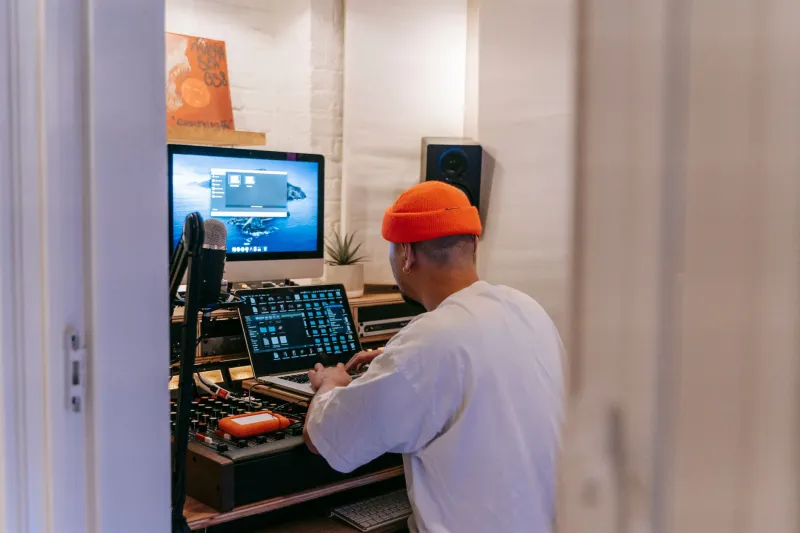
Four years later, she went back into the stems with an experimental producer from Chicago named Devlin Park, who she'd met at a festival in Nashville. Park heard something in the original that Bret had buried under production — a grief she described as "trying not to sound sad" when she recorded it.
"He stripped everything out and played me the vocal alone," Bret recalled. "And I started crying. Because I could finally hear what I was actually saying. I'd spent all this time producing around the emotion instead of producing toward it."
The resulting rework — slower, more exposed, with a completely different instrumental palette — was released quietly on her Bandcamp page with almost no promotion. It got three times the streams of the original within a month.
When the Collaborator Changes the Meaning
The most interesting of these projects tend to happen when the collaborator brings a genuinely different perspective — not just a different sound, but a different life experience that illuminates something in the original material that the writer couldn't see from inside it.
Indie folk artist James Rourke, based out of Minneapolis, spent most of his twenties writing songs about rootlessness and belonging that he described as "vague on purpose." When he revisited several of them in collaboration with a Somali-American spoken word artist named Faadumo Hirsi — someone he'd connected with through a local arts collective — the songs took on specificity they'd never had.
"She heard things in those songs that I'd written around," Rourke said. "Things about displacement and identity that I'd kind of gestured at but never committed to. She committed to them. And suddenly the songs were about something."
The collaborative EP they released last year, which reworks four of Rourke's older songs with Hirsi's voice woven through them, was picked up by two independent radio stations and earned both artists a level of attention neither had experienced before. More importantly, Rourke says, it changed how he writes now. "She taught me to say the actual thing."
The Risk of Going Back
Not everyone who tries this comes out the other side happy. Several artists interviewed for this piece described abandoned projects — attempts to revisit old work that fell apart because the songs couldn't survive being examined too closely, or because the chemistry with a collaborator turned out to be wrong.
Electronic producer and DJ Sasha Montiel, who works out of Los Angeles, spent eight months trying to rework a track from her 2017 catalog with a guitarist she admired. "The song broke," she said simply. "We pulled on one thread and the whole thing came apart. And what was left wasn't the original and wasn't anything new. It was just... rubble."
She eventually shelved the project, but says the experience taught her something valuable about which songs are candidates for this kind of excavation. "Some songs are finished," she said. "They said what they said. And some songs are like questions that never got answered. Those are the ones worth going back to."
What Ownership Actually Means
Underlying all of these projects is a question about authorship and ownership that goes deeper than copyright law. When you write a song at 23 and revisit it at 31, are you the same author? Do you have the right to change what it means — or does it mean something now independent of your intentions when you made it?
Bret thinks about this a lot. "There are people who love the original version of that song," she said. "For them, it means something specific that has nothing to do with me anymore. And I had to make peace with the fact that I was doing this for me, not for them. The original still exists. I wasn't taking anything away."
That framing — the rework as addition rather than replacement, as a parallel conversation rather than a correction — seems to be how the most thoughtful artists in this space approach it. The old song stays. The new version asks different questions. And somewhere in the space between them, something true about the artist's relationship with their own work becomes visible.
For Rourke, that visibility is the whole point. "The first version of a song is who you were when you wrote it," he said. "The rework is who you are now, in conversation with that person. And honestly? Sometimes those are the most honest conversations I've ever had."
That might sound like a lot of weight to put on a remix. But when it works — when an artist cracks open something they made years ago and finds something they didn't know was in there — it's hard to argue with the result.