One Night, One Payday: Why the Stage Is Now Worth More Than the Studio

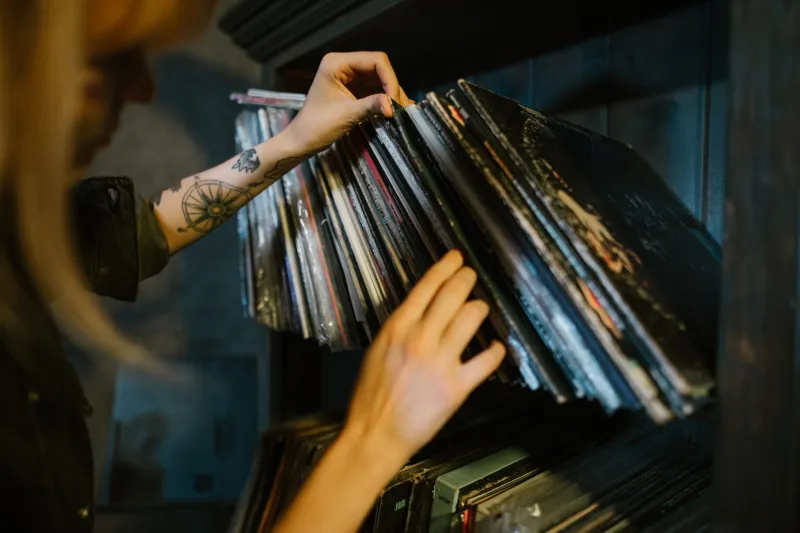
Photo by Photo by Tanner Ross on Unsplash on Unsplash
Let's do some math that the music industry would rather you not think too hard about.
A mid-level independent artist with a dedicated following — say, two hundred thousand monthly listeners on Spotify — earns somewhere between $600 and $800 a month from streaming. If that same artist plays a sold-out show at a five-hundred-capacity venue, charges $20 a ticket, and moves merch at even a modest clip, they can pull in $8,000 to $15,000 in a single night. Sometimes more.
One night. One show. More money than most streaming platforms will pay out in a year.
This isn't a secret among working musicians. It's become the foundational logic around which independent music careers are now built.
The Math That Changed Everything
The collapse of recorded music revenue — the long, grinding shift from album sales to streaming payouts — is well-documented. What gets talked about less is what it actually forced artists to do, and how creatively some of them responded.
Touring was always part of the revenue picture. But for most of music industry history, touring was understood as promotion for the record. You went on the road to sell albums. The record was the product; the show was the advertisement.
That relationship has completely inverted for a huge swath of working artists. The show is now the product. The record — or more precisely, the recorded content — is the advertisement. Songs exist, in this model, to get people to buy tickets and stand in a room with you.
Once you internalize that shift, a lot of decisions that might look strange from the outside start making perfect sense. Why would an artist spend $40,000 recording an album when that same $40,000 could fund a regional tour that generates three times the return? Why structure your release calendar around a label's album cycle when you could structure it around your touring calendar?
The Merch Stack
Ticket revenue is just the starting point. The real financial architecture of a modern live show is built around what happens before, during, and after the music plays.
Merchandise has always been part of the touring economy, but the sophistication of how artists are deploying it now is genuinely different. The standard table with t-shirts and CDs has been replaced, for artists who've done their homework, with a carefully tiered product ecosystem.
There are the entry-level items — the $30 tee, the $5 sticker pack — that almost anyone will pick up. Then there are the mid-tier items: the hoodie, the vinyl, the art print. And then there are the premium items that a small but significant percentage of dedicated fans will always buy: the hand-numbered limited edition, the signed poster, the item that only exists because you were in that room on that night.
That last category is where the real margin lives. A hand-numbered, signed vinyl run of two hundred copies at $60 each is $12,000 in revenue that didn't exist before someone decided to make it exist. It's also a collector's item that fans will talk about, post about, and keep forever — which is its own kind of marketing.
VIP Packages and the Experience Economy
Beyond merch, the experiential add-on has become one of the most significant revenue levers available to working artists.
VIP packages — which can include early entry, soundcheck access, a brief meet-and-greet, a signed item, or some combination of all of the above — have moved from being a major-label perk to a standard offering for artists playing mid-sized rooms. The price points vary wildly, from $50 upgrades to $300-plus packages, but the economics are consistent: a relatively small number of highly engaged fans will pay significantly more for access and intimacy.
For an artist playing a five-hundred-cap room, selling fifty VIP packages at $75 each adds $3,750 to the night's revenue before a single ticket is scanned at the door. That number scales fast across a tour.
Touring managers and promoters who work with independent artists are increasingly thinking about this from the jump — building VIP tiers into the show announcement, pricing them with the same care as ticket tiers, and treating them as a core part of the financial plan rather than an afterthought.
The Touring Strategy Is the Album Strategy
Here's where it gets philosophically interesting, and where the conversation stops being purely about money.
Artists who've fully committed to the live-first model have started thinking about their releases differently. Instead of building toward an album drop and then touring in support of it, they're building toward a tour and releasing music in a way that serves that goal. Singles and EPs timed to coincide with regional touring legs. Exclusive tracks available only at shows. Content recorded live and released in the days following a performance.
The album, in this model, doesn't disappear — but it becomes one tool among many rather than the organizing principle of a career. Some artists have gone further, releasing music specifically designed to be experienced live, with studio versions that feel like sketches compared to what happens in the room.
This is a meaningful creative shift, not just a financial one. It pulls the center of gravity back toward performance, toward presence, toward the unrepeatable quality of a live show. Which, for a lot of fans, is exactly where they wanted it to be.
What Gets Harder
None of this is frictionless. Touring is expensive, physically demanding, and logistically brutal in ways that don't show up in the revenue column. Gas, hotels, van repairs, booking fees, venue splits, insurance — the costs add up fast, and the margin on a tour can shrink to nothing if something goes wrong.
For artists without a team — a booking agent, a tour manager, a merch person — doing all of this while also performing every night is genuinely unsustainable over the long haul. The independent artists who've cracked the live-first code are usually the ones who've either built a small but functional team around themselves, or who've been strategic enough to keep their touring footprint manageable.
Playing fewer shows, better, with a fully realized merch operation and a VIP offering, often outperforms a grinding forty-city run done on the cheap.
The Night That Pays for the Year
There's a version of a music career that's emerging right now that would have looked strange fifteen years ago. An artist with a modest but deeply loyal following, releasing music on their own terms, playing selective shows in the right rooms, treating every performance as a complete economic and creative event.
It's not glamorous in the way that the old model promised glamour. There's no label advance, no radio promo budget, no publicist working the trades. But there's something it does have: a direct line between the artist and the people who care about the music, with almost nothing in between.
One good night, in the right room, with the right setup — that can be the difference between a career that continues and one that doesn't. And more artists are figuring that out every day.