You Had to Be There: The Secret Languages That Make Local Music Scenes Feel Like Home
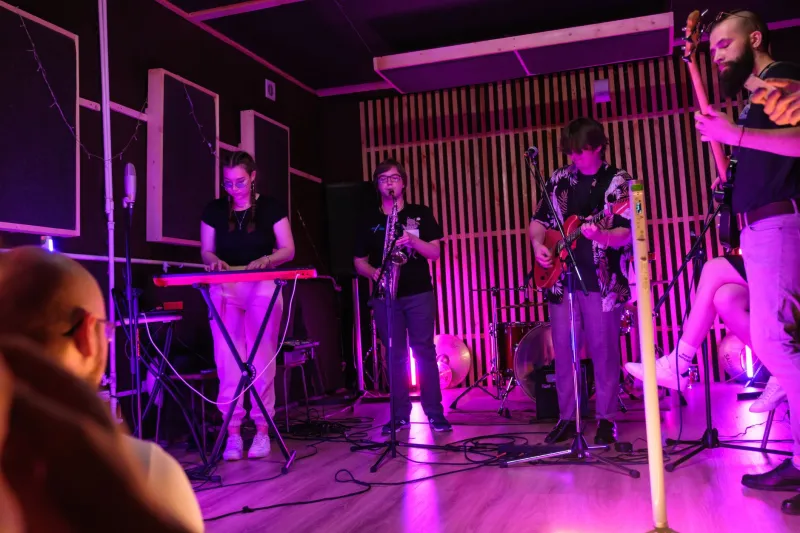
There's a moment that happens at a certain kind of show — maybe it's a Tuesday night at a bar with sticky floors, or a basement in some midwestern college town where the ceiling is too low and the PA is too loud. The opening band finishes their set. The crowd doesn't check their phones. They just... stay. They talk to each other. They buy the merch not because it's nice but because it's a kind of membership card. And somewhere in that room, a newcomer looks around and realizes they have no idea what's going on — but they desperately want to.
That feeling is the scene. Not the music exactly, but the culture built around it. The rituals, the rules, the references that only make sense if you've been showing up for a while.
The Three-Band Rule and Other Midwestern Gospels
If you've spent time in the DIY circuit anywhere from Columbus to Minneapolis to Kansas City, you've probably absorbed the three-band minimum without anyone ever explaining it. The ethos goes something like this: you don't leave after the first act, you don't leave after the second act, and if you're a real one, you're still there when the headliner wraps. It's not written anywhere. Nobody enforces it. But the regulars know, and new faces learn fast.
"It's just respect," says Danny Rourke, who's been booking shows at a small venue in Columbus for going on eight years. "These bands drove three hours, loaded their own gear, and they're getting paid maybe gas money. The least you can do is stay." He laughs. "But it's also more than that. It's how you signal that you're actually part of this, not just passing through."
This kind of unwritten code is everywhere once you start looking. In certain Chicago punk circles, the tradition of helping load out gear after a show — even for bands you've never met — is practically obligatory. In the Pacific Northwest folk scene, there's a long-standing habit of full silence during performances, even at bar venues where that's not the norm. Violating it doesn't get you thrown out, but it does get you looks.
The Cover Song as Password
One of the most fascinating micro-traditions across American music scenes is the use of specific cover songs as cultural shorthand. The right cover, played at the right moment, tells a room everything it needs to know about a band's influences, their sense of humor, and their place in the local hierarchy.
In indie rock communities especially, certain songs have taken on almost totemic significance. A band that drops a Guided by Voices deep cut — not the obvious one, the deep one — is communicating fluency in a specific tradition. A well-executed Big Star cover in a Southern city is practically a handshake. These aren't calculated moves; they're genuine expressions of taste that happen to double as community signals.
Anya Patel, a musician and longtime scene fixture in Nashville's non-country underground, describes it as a kind of musical vocabulary. "When a band covers something unexpected — something that shows they've actually done the homework — the regulars in the room just feel it. There's this collective exhale, like, okay, these people are for real." She pauses. "And when a touring band plays the obvious crowd-pleaser cover, you can feel that too. It's not that it's bad. It's just that it doesn't tell you anything."
Venue Memory and the Geography of Belonging
Every scene has its sacred spaces, and the mythology built around those spaces is part of what holds a community together. The bar that hosted a legendary show in 2009. The basement that burned down but lives on in stories. The parking lot where everyone ends up after last call.
These places accumulate meaning in a way that's hard to explain to outsiders. It's not nostalgia exactly — it's more like shared memory functioning as glue. When you reference a specific show at a specific venue, you're not just recalling an event. You're invoking a shared experience that binds the people who were there.
Venue owners often become the keepers of this mythology, whether they want to be or not. "People come in here and point to that corner and say, 'that's where so-and-so played their last show before they moved to New York,'" says Carla Medina, who runs a small venue in Albuquerque that's been operating for over a decade. "I've started writing stuff down because I don't want it to get lost. This building holds a lot of stories."
The Ritual of the Merch Table
It sounds mundane, but the merch table is one of the most sociologically interesting spots in any music venue. It's where artists and audiences actually meet — not from behind a microphone, not through a screen, but face to face. And the etiquette around it varies wildly from scene to scene in ways that reveal a lot about local values.
In some communities, buying merch is a near-sacred act of support — you do it even when you're broke, even when you already own three of their shirts. In others, the real currency is the conversation itself: standing at that table and talking to the artist for ten minutes is worth more than any transaction. Some scenes have developed a tradition of leaving notes or drawings with merch purchases. Others have a habit of trading homemade zines or art at the table, turning it into a kind of informal marketplace.
"The merch table is where I find out if a scene is healthy," says Rourke. "If people are lingering there, talking, introducing friends to the band — that's a scene that's going to survive. If everyone bolts the second the last song ends, that's a room full of spectators, not a community."
Why Any of This Matters
It's easy to dismiss these rituals as trivial — insider baseball for people who take going to concerts a little too seriously. But that would miss the point entirely.
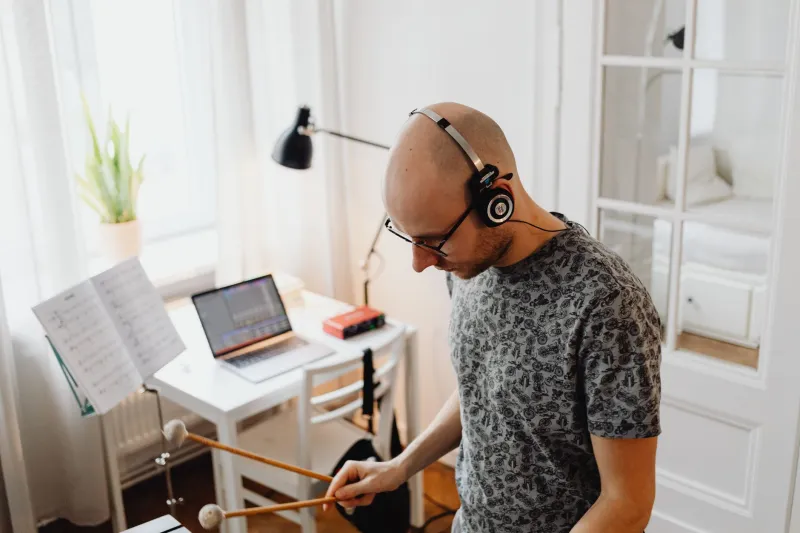
In an era when most of our cultural consumption happens alone, through headphones, in algorithmically curated bubbles, these shared codes and traditions are doing something genuinely important. They're creating the conditions for actual belonging. For the experience of being known in a room, of having a history with the people around you, of being part of something that didn't exist until enough people decided to show up and keep showing up.
The music is the reason you walk in the door. But the rituals? Those are the reason you come back.
And honestly, that's the whole thing. That's what a scene is.