3 AM and Everyone Knows It: The DJ Sets Where the Room Gets Real
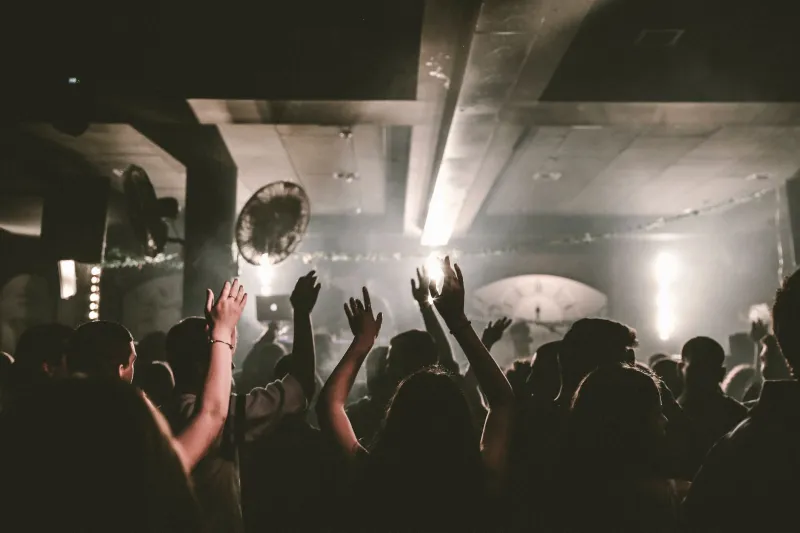
Ask anyone who's spent serious time in small clubs and they'll tell you about a set. Not a famous one — not some legendary night with a headliner and a thousand people. A small one. A weird one. A Tuesday in a bar with a capacity of maybe 200, and a DJ nobody outside the city had heard of, and something that happened in that room that felt like it couldn't have happened anywhere else.
Those nights are the ones people describe in hushed tones, like they're talking about something sacred. And in a way, maybe they are.
What Happens When the Room Gets Small
There's a version of DJ culture that lives in festival fields and warehouse raves, and it's spectacular in its own right. But the intimacy of a small venue does something different to the relationship between the person behind the decks and the people in front of them. The scale changes everything.
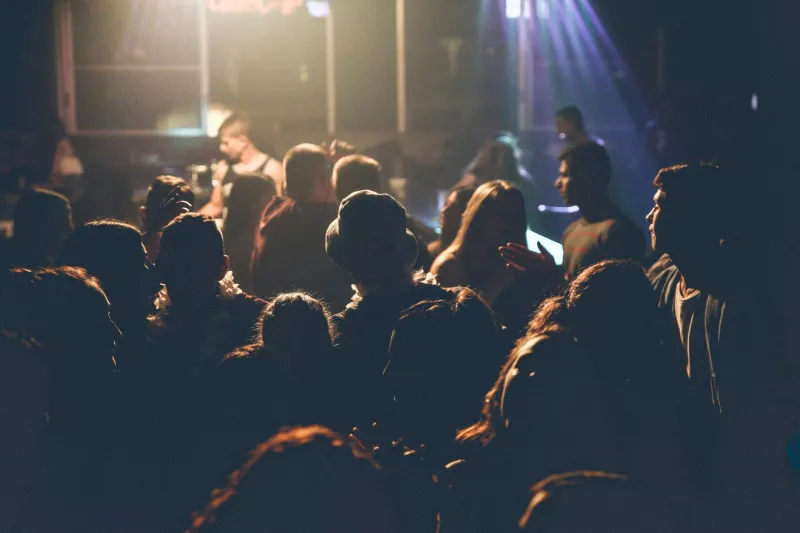
In a room of 150 people, a DJ can see faces. They can watch someone's shoulders drop when a particular bassline hits. They can notice the couple in the corner who've been dancing separately for an hour and are suddenly facing each other. They can feel the collective shift in energy when a room moves from buzzing to something deeper, more personal.
DJ Renata Voss, who runs a monthly night at a 180-capacity bar in Portland, Oregon called "After the After," describes it as reading a room the way a therapist reads a patient. "You're watching for what people need, not what they want," she said. "What they want is whatever song they recognized from the radio. What they need is usually something they didn't know existed until it's playing."
Voss's sets regularly run past 3 AM, and she says the final hour is always the most honest. "The people who are still there at that point — they've committed. They're not performing anymore. They're just in it."
The Confessional Quality of Late-Night Sound
There's a specific emotional grammar to a late-night set in a small room, and the best DJs know how to speak it fluently. It's not about genre or BPM charts. It's about emotional arc — the way a set can take a room through something that feels almost narrative, like a story being told in bass and melody and the spaces between tracks.
In Austin, DJ and producer Lena Morrow has built a devoted following around a bi-weekly night she calls "Soft Landing." The concept, she says, started as a joke — a night explicitly for people who needed to come down from the week — but it became something she takes seriously. Her sets move slowly, rarely peaking in the way a traditional club night does. Instead, they drift and circle, returning to certain emotional textures the way a conversation returns to the thing you were really trying to say.
"People come in wound up and they leave feeling like they talked to someone," she said. "Even though nobody said anything. Even though I never left the booth."
Regulars at Soft Landing describe the experience in strikingly similar terms. Words like "understood" and "seen" come up constantly — the vocabulary of being heard, not entertained.
Reading the Room Is an Art Form
The skill required to build that kind of experience is harder to quantify than technical proficiency. Mixing cleanly, reading tempos, managing transitions — those are learnable. But the ability to feel what a room needs and respond in real time? That's something closer to emotional intelligence than musicianship.
Detroit-based DJ Kwame Ellis, who's been playing small venues in the Midwest for almost a decade, talks about developing what he calls "peripheral listening." "You stop hearing the music the way the audience hears it," he explained. "You start hearing it as information. You're monitoring the room's emotional state constantly, and the music is your tool for responding to it."
Ellis describes moments in sets where he's made decisions that, on paper, make no sense — dropping the tempo at a peak moment, pulling back the energy just when a crowd seems to want more — and watching those choices land perfectly because the room was ready for something it didn't know it wanted.
"The best thing I ever did was trust the room more than my playlist," he said.
The Crowd's Role in All of This
What makes these nights genuinely communal is that the audience isn't passive. They're participants. The feedback loop between a DJ and a small crowd is active and constant — a conversation happening entirely without words, entirely through bodies and music and the accumulated weight of a night that started hours ago.
Voss talks about regular attendees at her nights who've become, over time, almost like collaborators. "There are people who've been coming for two years," she said. "I know what they need. I know when someone's having a bad week by how they're standing. And I play for that. I play for the specific group of people who showed up that night."
That specificity — the un-reproducibility of a particular room on a particular night — is precisely what gives these sets their staying power in memory. You can't stream it later. You can't watch a recording and get the same thing. The experience belongs to the people who were there, shaped by who they were and what they brought into the room with them.
And the DJ, standing behind those decks at 3 AM, reading faces and adjusting in real time, is doing something that no algorithm has figured out how to replicate: being genuinely present with another person's feelings and responding with care.
That's not a performance. That's a conversation. And some of the most honest ones happening in America right now are happening in rooms you've probably never heard of, between a DJ and a crowd who found each other on a Tuesday night.