Hidden in Plain Sight: How to Find the Underground Artists Shaping Your City's Sound Right Now
Here's a thing that happens in almost every American city: someone moves away, spends a few years somewhere else, comes back, and suddenly sees it. The venues they never visited. The murals they never stopped to look at. The artists who were building something extraordinary right there on their block, the whole time they were wishing they lived somewhere with a "real" scene.
The scene was always there. They just weren't paying attention.
Maybe you're in that position right now. Maybe you've been streaming the same algorithmically curated playlists for two years while a genuinely singular songwriter plays to 30 people at a bar six blocks from your apartment every third Thursday. This guide is for you.
Finding and supporting underground local artists isn't complicated. It mostly just requires showing up. Here's how to start.
Step One: Physically Go to the Open Mic
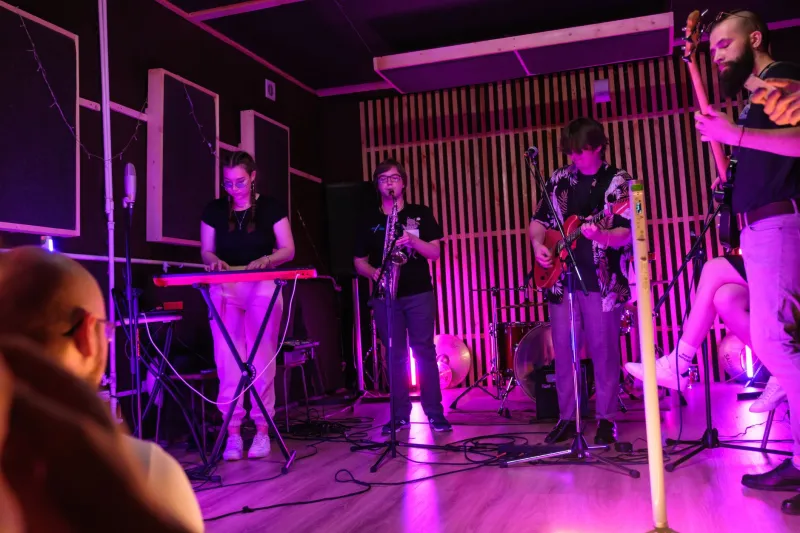
Open mics are unglamorous. The sound system is usually iffy. Someone will play a 12-minute blues solo that tests your patience. But open mics are also where you will find — reliably, consistently — artists in their rawest and most authentic form. And occasionally, you'll witness something that stops you cold.
Every city has them. Bars, coffee shops, bookstores, community centers — the format is everywhere if you look. A quick search for "open mic [your city]" or a browse through Eventbrite and local Facebook groups will surface more options than you expect. Make a commitment to go to at least one a month. Talk to the people performing. Ask who else you should be listening to. Artists are usually the best curators of their own local scene.
The same logic applies to house shows. These are harder to find if you don't already know the right people, but that's exactly the point — they reward genuine community involvement. Follow local artists on social media, not to consume their content, but to watch for show announcements. Many house show invites spread through word of mouth or private messages. The more you engage authentically, the more those doors open.
Step Two: Tune Into Your Local and College Radio Stations
Community and college radio stations are underappreciated cultural institutions, and right now is actually a great time to rediscover them. Stations like WFUV in New York, KCRW in Los Angeles, WBEZ in Chicago, and hundreds of smaller college stations across the country are staffed by people who are genuinely obsessed with music — and who actively seek out local artists to champion.
Many of these stations have specific shows dedicated to local music. WNUR at Northwestern, for instance, has long been a home for Chicago-area experimental and indie artists. The University of Texas's KVRX has a similar reputation in Austin. Whatever city you're in, there's a good chance a nearby station has a local music hour worth finding.
These shows are also goldmines for discovery because the DJs do the curation work for you — and they're doing it from a place of genuine knowledge and love, not engagement metrics. When a community radio DJ puts an unknown local artist into rotation, it means something.
Step Three: Follow the Independent Labels (Even the Really Small Ones)
Major labels don't break local scenes. Independent labels do. And in most mid-sized and large American cities, there are small local labels putting out genuinely remarkable work — often in very limited runs, often in formats (cassette, vinyl) that signal a real commitment to craft.
Spend some time digging on Bandcamp. Search by location. Browse genre tags filtered to your region. When you find an artist you like, look at what label they're on, then look at the rest of that label's roster. This is one of the most reliable ways to fall down a rabbit hole of local talent, because small labels tend to sign artists with a shared aesthetic sensibility.
Following these labels on social media — Instagram, Bandcamp, their own newsletters — means you'll be among the first to know about new releases, shows, and events. It also signals to the artists and their communities that people are paying attention, which matters more than you might think.
Step Four: Spend Money, Even a Little
This one's important. Discovering local artists is great. Actually supporting them financially is what makes a difference in whether they keep making work.
You don't have to spend a lot. Buying a $7 cassette at a show, picking up a digital album on Bandcamp for $5, or tipping a few dollars at a free show — these things add up, and they're felt immediately by artists operating on thin margins. A $10 Bandcamp purchase from a fan who found you organically and genuinely cares about your music is worth more to an independent artist than thousands of streams.
If you really connect with someone's work, consider their Patreon if they have one. Even a $3/month subscription signals sustained support and gives artists something they can actually plan around.
And if a local artist is crowdfunding a project — a recording, a tour, a vinyl pressing — that's an especially meaningful place to put a few dollars. You're not just buying something; you're helping something exist.
Step Five: Use Your Voice
Word of mouth is the original algorithm, and it's still the most powerful one. When you find a local artist you love, talk about them. Not just a share-and-forget Instagram story — a real recommendation to real people.
Text a friend who you know would love this. Bring someone to the next show. Write an actual review on their Bandcamp page. Tag them in a genuine post about why their music hit you. These small acts of advocacy have outsized impact for artists who don't have publicists or marketing budgets.
The story of how artists go from playing small rooms to becoming regional institutions almost always involves a handful of early, passionate advocates who just couldn't stop talking about them. Be that person for someone.
Why It Matters Beyond the Music
Here's the bigger picture: local arts ecosystems are fragile, and they need active participation to survive. Venues close when they can't fill rooms. Artists stop making music when they can't sustain themselves. The scenes that feel vibrant and alive are that way because enough people showed up, spent a little money, and told their friends.
Every city has hidden artists doing extraordinary things. They're playing coffee shops and warehouses and living rooms. They're releasing music quietly on Bandcamp and broadcasting on community radio at 11pm on a Tuesday. They're building something real, on their own terms, right in your backyard.
All they need is for you to show up.