Just Two People Talking: Why the Long Conversation Is the Most Powerful Thing on the Internet Right Now
Let's be honest about something. Most of us have watched a podcast clip go viral, clicked over to the full episode out of curiosity, and then looked up two hours later wondering where the afternoon went. It happens constantly. And it's not an accident.
There's something almost counterintuitive happening in entertainment right now. The same culture that gave us Stories, Reels, and six-second bumper ads is also producing some of the longest, most unedited, most genuinely unhurried content on the internet — and people cannot get enough of it. The long-form interview is having a serious moment. And I'd argue it's not a trend. It's a correction.
We Got Tired of the Highlight Reel
For a while, the internet trained us to want things fast. Shorter videos, punchier headlines, snappier takes. Platforms optimized for the quick hit, and content followed. But somewhere in that sprint toward brevity, something got lost — the sense that you actually know someone after spending time with their work.
A 90-second clip of an artist talking about their new album tells you almost nothing. It tells you what their publicist wants you to know. But sit them down for an hour and a half with a host who's genuinely curious, no hard cuts, no graphics package softening the awkward pauses — and suddenly you're somewhere completely different. You start to hear how they actually think. You catch the moments they surprise themselves. You hear them laugh at something they didn't expect to laugh at.
That's not content. That's a conversation. And audiences are starving for it.
The Trust Economy of the Long Sit-Down
Here's what makes the long-form interview format so different from almost everything else in media right now: it's extremely hard to fake.
You can carefully craft a tweet. You can art-direct a photoshoot. You can pick the perfect ten seconds of a quote for an Instagram caption. But you cannot sustain a performance for two hours. Eventually, the real person shows up. And that's exactly what audiences are tuning in for.
This is why shows like Hot Ones, long-running podcast interviews, and YouTube sit-down series with genuine creative people have built such fierce, loyal communities. When viewers watch someone navigate a genuinely unexpected question — or sit with a thought before answering it — they feel like they're seeing something real. That feeling creates trust. And trust, in the current attention economy, is basically priceless.
For artists and creators specifically, this format has become one of the most powerful tools they have. Not for promotion exactly, but for connection. There's a meaningful difference between an audience that streams your music and an audience that feels like they actually get you. The long conversation is one of the few reliable ways to close that gap.
The Community That Forms Around the Conversation
What's easy to miss if you're not paying close attention is that long-form interview shows aren't just content — they're community infrastructure.
Take any well-established podcast or YouTube interview channel with a devoted following and look at what's happening in the comments, in the fan subreddits, in the Discord servers that spring up around them. People aren't just watching and moving on. They're talking. They're timestamping the moments that hit them. They're arguing about the best episodes. They're introducing each other to the artists featured on the show.
The interview becomes a shared reference point — a piece of cultural common ground that a community builds itself around. In that way, a great long-form conversation functions less like traditional media and more like a campfire. People gather around it. They stick around after it's over.
This is especially true for shows that platform artists and creators who aren't household names yet. When a podcast with a dedicated following gives an emerging musician two hours to just talk, that artist often gains something no PR campaign could buy: a community that already feels invested in them before they've even pressed play on the music.
Livestreams and the Conversation That Talks Back
If the podcast and YouTube interview represent the polished end of this format, livestreamed conversations are the raw, unfiltered other side — and they're doing something genuinely new.
When a creator goes live for a sit-down with an artist or filmmaker or writer, the audience isn't just watching. They're participating. Questions come in from chat. Reactions are visible in real time. Sometimes the host pivots based on what the audience wants to know. The boundary between interview and community event dissolves.
This is happening across Twitch, YouTube Live, Instagram, and increasingly on platforms built specifically around this kind of interaction. And the artists who lean into it — who are willing to show up without a script and just talk — tend to build some of the most devoted communities in their space. There's something about being in the room, even digitally, when a real conversation is happening that creates a sense of shared experience that recorded content rarely matches.
Why This Format Belongs to This Moment
I think the rise of the long-form interview says something honest about where we are culturally. After years of curated feeds and optimized content and parasocial relationships built on carefully managed personas, people are craving something that feels unmanaged. Unpolished. Real.
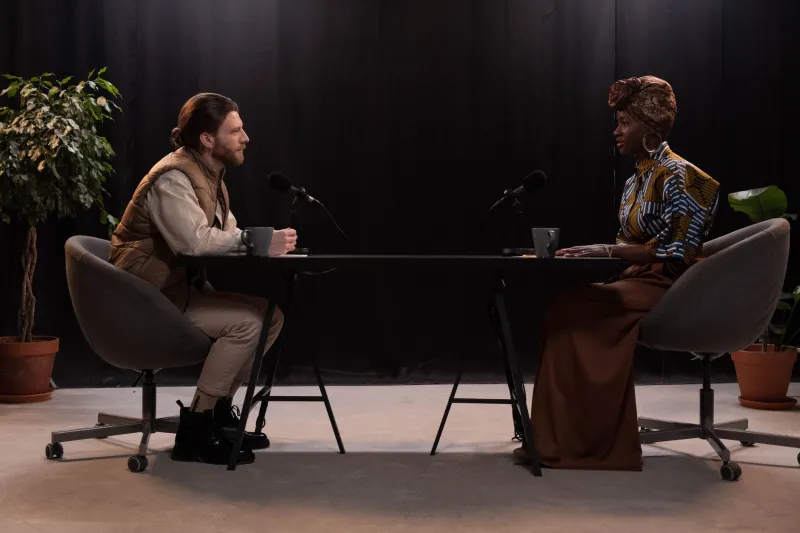
The two-people-sitting-down format — whether it's a podcast in a home studio, a YouTube interview in a coffee shop, or a livestreamed conversation with the chat going wild — delivers exactly that. It's not perfect. It's not always even particularly well-produced. But it's present in a way that a lot of entertainment simply isn't.
And that presence, that sense of being in a real conversation with someone, is what builds the kind of community that sticks around. Not just for the next episode, but for the long haul.
The interview isn't making a comeback. It was always there. We just finally remembered why it matters.